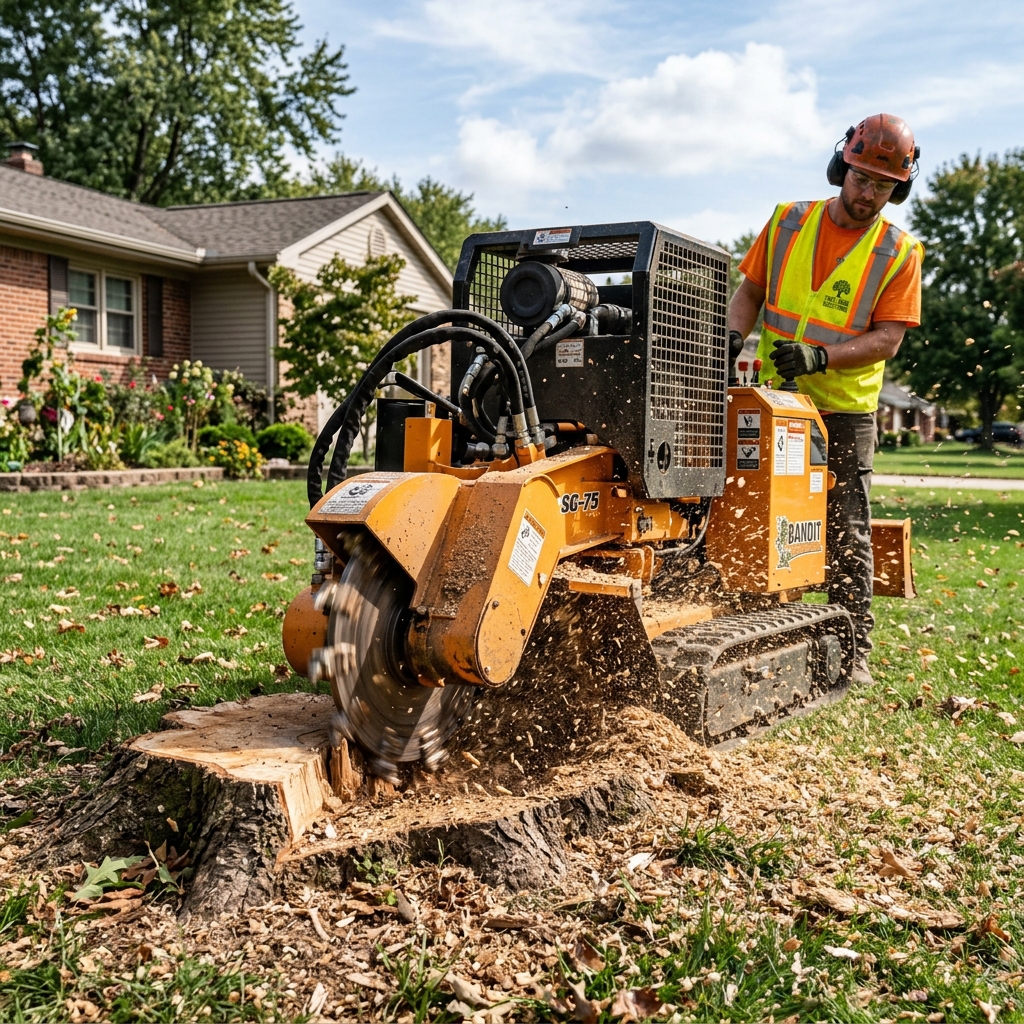
Deciding Between Grinding and Full Extraction
After a tree removal, property owners are left with a persistent reminder: the stump. Stumps are not only tripping hazards and lawnmower obstacles, but they also attract boring beetles, termites, and fungal growth. When deciding how to clear the stump, you have two primary options: **stump grinding** or **complete stump removal (extraction)**. Understanding the mechanics, costs, and lawn outcomes of each is key to selecting the right method for your yard.
Stump Grinding: The Fast, Low-Impact Solution
Stump grinding utilizes a high-horsepower Vermeer machine with a rotating cutting wheel lined with carbide teeth. The operator swings the wheel back and forth, shaving the wood down into mulch. We grind the stump to a standard depth of **8 to 12 inches below the turf line**, pulverizing the main root flare.
Pros:
- Minimal Yard Damage: Grinding machines are compact and equipped with turf-friendly tracks, leaving surrounding lawns intact.
- Speed: A typical 24-inch cottonwood stump is fully ground in under 45 minutes.
- Cost-Effective: Grinding requires less labor and machinery, costing significantly less than full excavation.
- Useful Byproduct: The resulting wood chips make excellent weed-barrier mulch for garden beds.
Cons:
- Root Systems Remain: Lateral root structures deep underground are left to decay naturally, which can take 5 to 10 years depending on the species.
- Re-planting Limitations: You cannot immediately plant a new tree in the exact same spot without excavating the subterranean wood pulp.
Stump Removal: Complete Extraction
Stump removal is a heavy-duty process that extracts the entire stump along with the major root ball. This requires digging out the root system with a mini-excavator, chopping lateral roots, and pulling the root mass out of the ground.
Pros:
- Complete Clearance: Leaves a clean slate, allowing you to immediately replant, lay foundations, or excavate for utilities.
- Zero Regrowth: Certain aggressive species (like cottonwoods or poplars) can send up sucker shoots from left-behind roots; extraction completely eliminates this risk.
Cons:
- Lawn Disruption: Leaves a massive crater that must be filled, compacted, and re-graded. Heavy excavators can cause soil compaction across your lawn.
- Higher Cost: Requires heavy machinery, hauling fees for the massive root ball, and truckloads of fill dirt.
How to Restore Your Lawn After Grinding
Once NoCo Services finishes grinding a stump, proper turf restoration requires a few key steps to prevent a permanent sinkhole or yellow grass patches:
- Extract Wood Pulp: Remove the bulk of the mixed sawdust and soil from the hole. Leaving too much wood pulp creates a nitrogen deficit in the soil as micro-organisms break down the carbon.
- Backfill with Topsoil: Fill the hole with high-quality sandy loam. Lightly pack the soil in layers to prevent future settling. Mound the topsoil about 2 inches higher than the surrounding lawn to allow for natural compaction.
- Apply Nitrogen Fertilizer: Add a high-nitrogen starter fertilizer to offset any remaining decomposing wood chips.
- Seed or Sod: Lay down Kentucky Bluegrass sod or apply native seed mix, keeping the area moist for 14 to 21 days until established.
Turf Restoration and Replanting After Stump Grinding
Once a stump has been ground down, property owners are often left with a large pile of wood chips mixed with soil. A common mistake is attempting to plant new grass or trees directly into this mixture. Because decomposing wood chips consume high levels of nitrogen, any vegetation planted in the immediate grind zone will quickly suffer from nutrient deficiency and yellowing. To successfully restore turf or replant, the mulch mixture must be excavated and replaced with clean, nitrogen-rich topsoil. For homeowners wishing to plant a new tree in the exact same spot, we recommend grinding the stump deeply (at least 12 to 18 inches below grade), removing the central root mass, backfilling with a compost-amended soil mix, and waiting at least one season to allow the surrounding lateral roots to decay. Alternatively, planting the new tree 3 to 5 feet away from the old site avoids root conflicts and ensures healthy establishment.
Preventing Resprouting in Aggressive Tree Species
Certain tree species common in Northern Colorado, such as Siberian Elms, Cottonwoods, Boxelders, and Willows, possess highly aggressive root systems. Simply grinding the stump down to ground level is often not enough to kill the tree. The remaining lateral root systems will actively send up 'root suckers' across your lawn, creating dozens of miniature tree clones within weeks. To prevent this relentless resprouting, NoCo Services offers targeted systemic treatments. Immediately following the cut or grind, we apply an arborist-approved, localized herbicide to the cambium layer (the active outer ring of the wood). This treatment is pulled down into the root system, halting sprout development without affecting neighboring lawns or desirable plants. For chemical-free properties, we recommend digging out the primary lateral roots near the surface or repeatedly mowing down suckers to exhaust the root system's energy reserves over time.