Professional Tree Trimming in Fort Collins
Preserve the health, structure, and beauty of your trees. Our experienced tree trimmers offer precision canopy thinning, deadwood removal, and safety-focused elevation clearance to protect your property and prolong tree lifespans.
Science-Based Canopy Care for Northern Colorado Trees
Proper tree trimming is far more than random branch cutting. Every cut is a wound, and incorrect pruning can expose your valuable trees to insect infestations, fungal infections, and structural decline. In Northern Colorado, dry winters and sudden, heavy spring snows put immense stress on tree crowns. Overloaded, unbalanced, or dead branches are major hazards that can easily fracture and cause severe property damage.
Our experienced crew uses state-of-the-art climbing gear and aerial lifts to carry out pruning designed to mimic natural tree growth patterns. We focus on enhancing the tree's vascular health, improving light penetration to secondary leaves, and mitigating high-wind drag by strategically thin-clearing dense crowns. We never 'top' trees, as it triggers weak sucker growth and structural instability.
Crown Cleaning & Thinning
Removal of rubbing, diseased, and dead limbs to allow wind and sunlight filtration.
Vertical Clearance
Raising lower limbs to maintain a clean 10ft buffer over driveways, rooflines, and walkways.
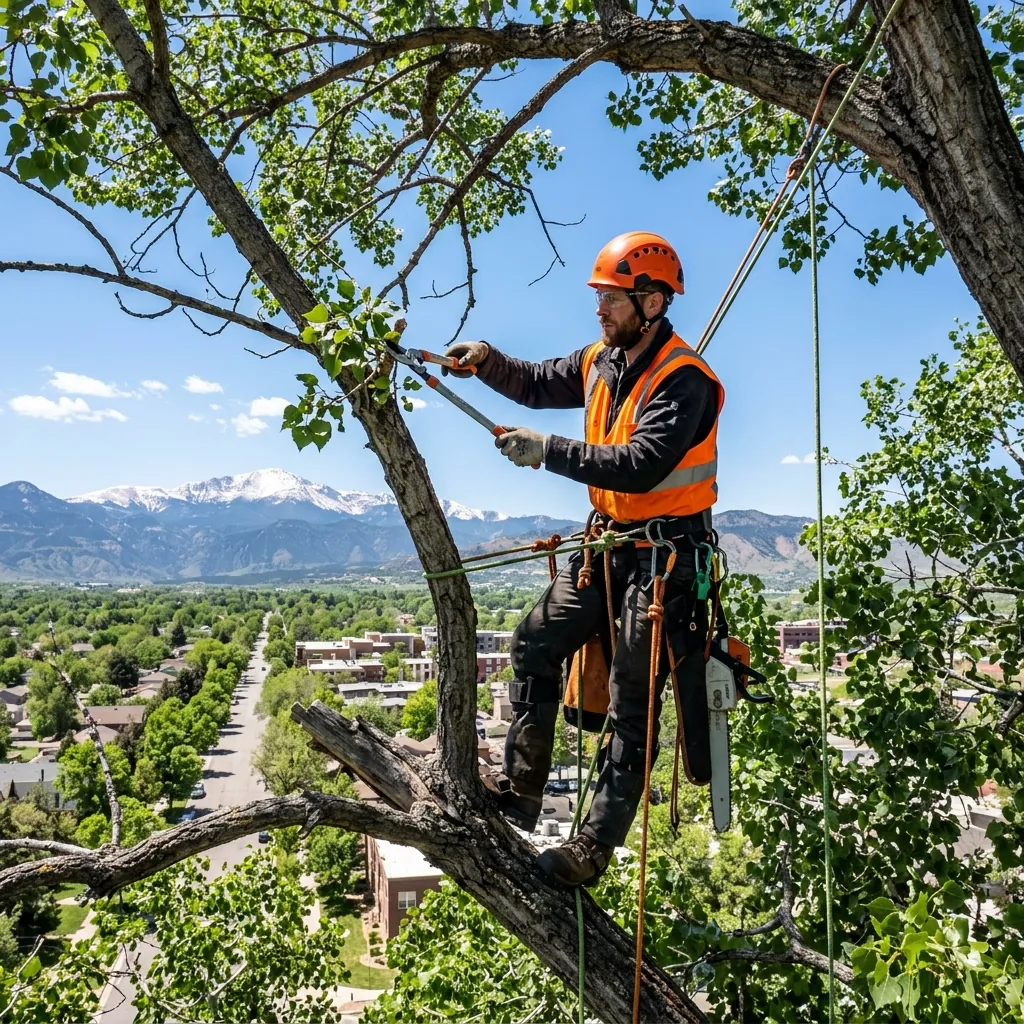
Canopy Pruning Guidelines Grid
We execute trimming according to three standard pruning classifications, matching the specific biological and structural needs of your property's trees:
Fine Pruning
Focuses on detail trimming of small branches up to 0.5 inches in diameter. This category is recommended for high-value ornamental trees, young growth structural guidance, and maximizing residential curb appeal.
- ✓ Ornamental & fruit trees
- ✓ Twig & crossing branch correction
- ✓ Aesthetics and balance focus
Medium Pruning
Involves the removal of dead, dying, weak, or diseased branches up to 2 inches in diameter. Essential for clearing hazardous dry limbs, increasing canopy sunlight penetration, and slowing down local insect infestation vectors.
- ✓ Standard yard canopy safety
- ✓ Diseased limb containment
- ✓ Increased wind & snow load tolerance
Coarse Pruning
Focuses strictly on major structural branches and heavy limbs over 2 inches in diameter. Primarily executed to clear branches interfering with buildings, lift foliage off roads, and prevent storm damage to utility feeds.
- ✓ Large cottonwoods & mature oaks
- ✓ 10ft roofline clearance buffers
- ✓ Heavy structural stress reduction
Canopy Health Checklist
Unsure if your trees need professional trimming? Use our tree-care checklist to assess your property's canopy health. If you observe any warning flags, our experienced climbers can provide an onsite inspection.
Trunk & Root Collar Integrity
Check for deep structural cracks, leaking sap, peeling bark, or fungal growths at the base of the trunk.
Deadwood Ratio Assessment
Ensure dead, dry, or bark-free branches do not exceed 10-15% of the total canopy volume. Higher ratios indicate systemic health issues.
Branch Attachment & Stems
Inspect for tight, V-shaped codominant stems. These stems share bark internally, creating weak joints that split open under heavy snow.
Canopy Density & Foliage
Look for early leaf drop, thinning canopy leaves, or localized yellowing, which are indicators of root stress or insect activity (e.g. Emerald Ash Borer).
Property & Clearance Buffers
Ensure limbs maintain a minimum 10ft clearance from chimneys, siding, rooflines, and main electric lines to prevent storm friction damage.
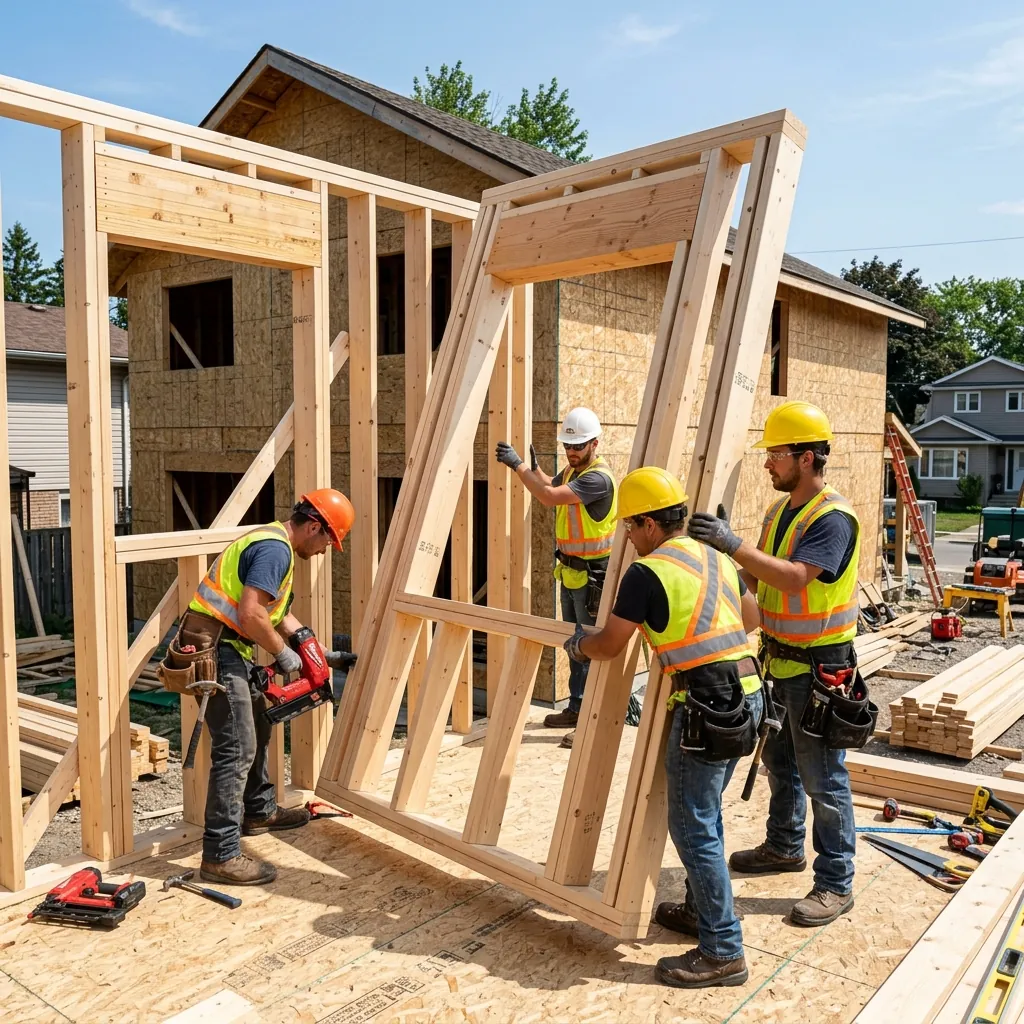
Our 4-Step Pruning Process
We prioritize tree health and property safety by utilizing a clear, controlled trimming method:
Canopy Survey
Our tree crew inspects the tree's health, identifies structural weak spots, and plans target cuts to maintain proper weight balance.
Climbing & Setup
Using low-impact climbing lines or bucket lifts, we access the canopy safely without using tree-scarring boot spikes.
Precision Cutting
Branches are sectionally removed using professional three-cut pruning methods, protecting bark and encouraging clean collar healing.
Chipping & Clean
We run all branches through our wood chipper, rake lawn areas clean of twigs, and blow pathways clear of sawdust before leaving.
Related Property Services
We provide full-service tree crew and land restoration options for Larimer and Weld County properties:
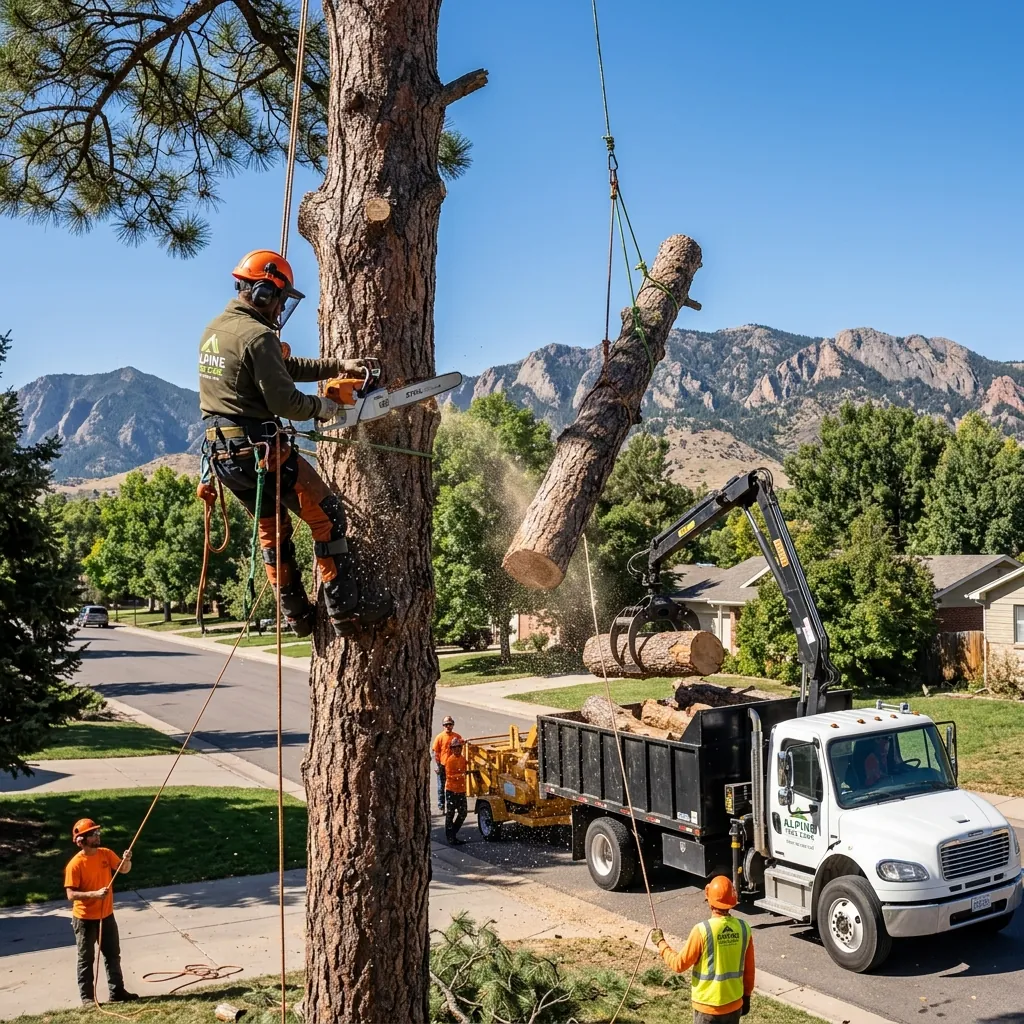
Tree Removal
Safety-focused extraction of dead, decaying, or high-risk structural trees located near buildings, using precision rigging systems.
View Details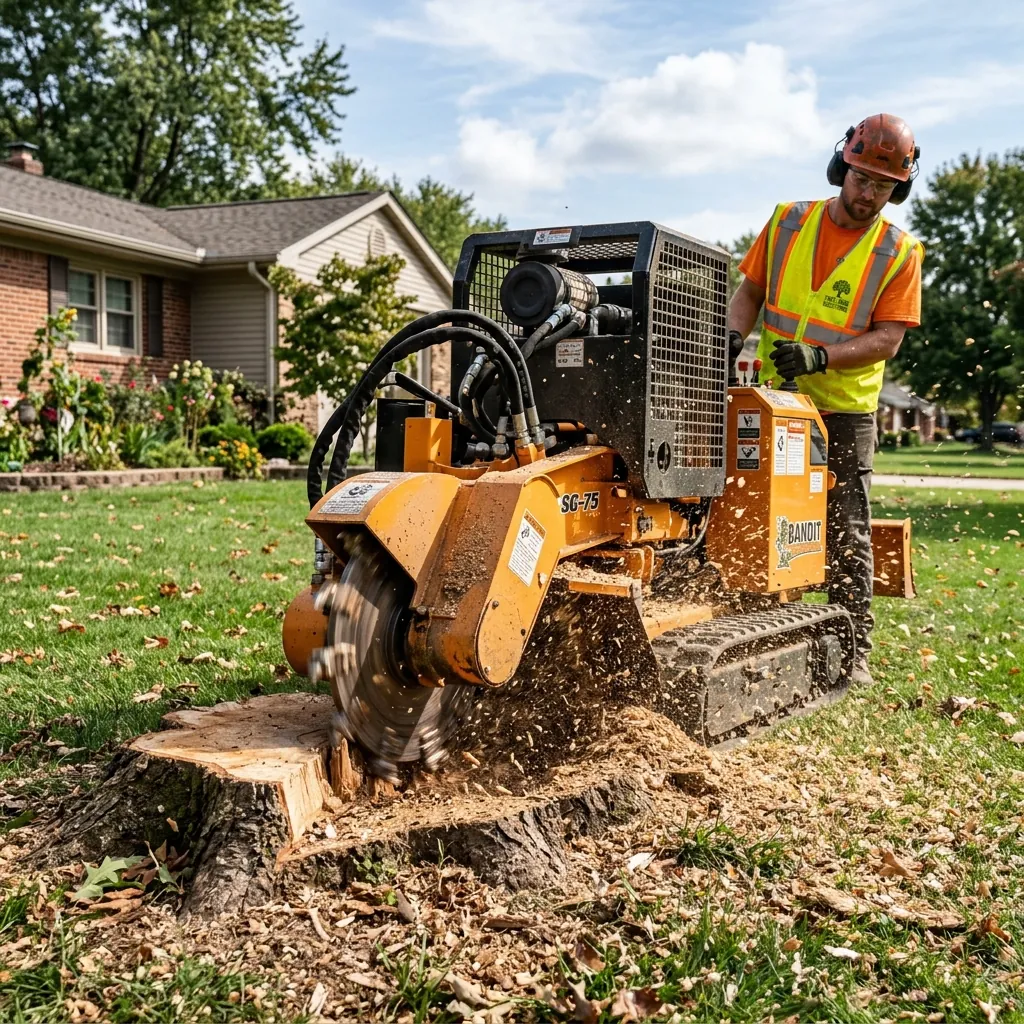
Stump Grinding
Deep stump grinding and root flare routing using Vermeer equipment to clear the soil and make room for fresh grass sod or patios.
View Details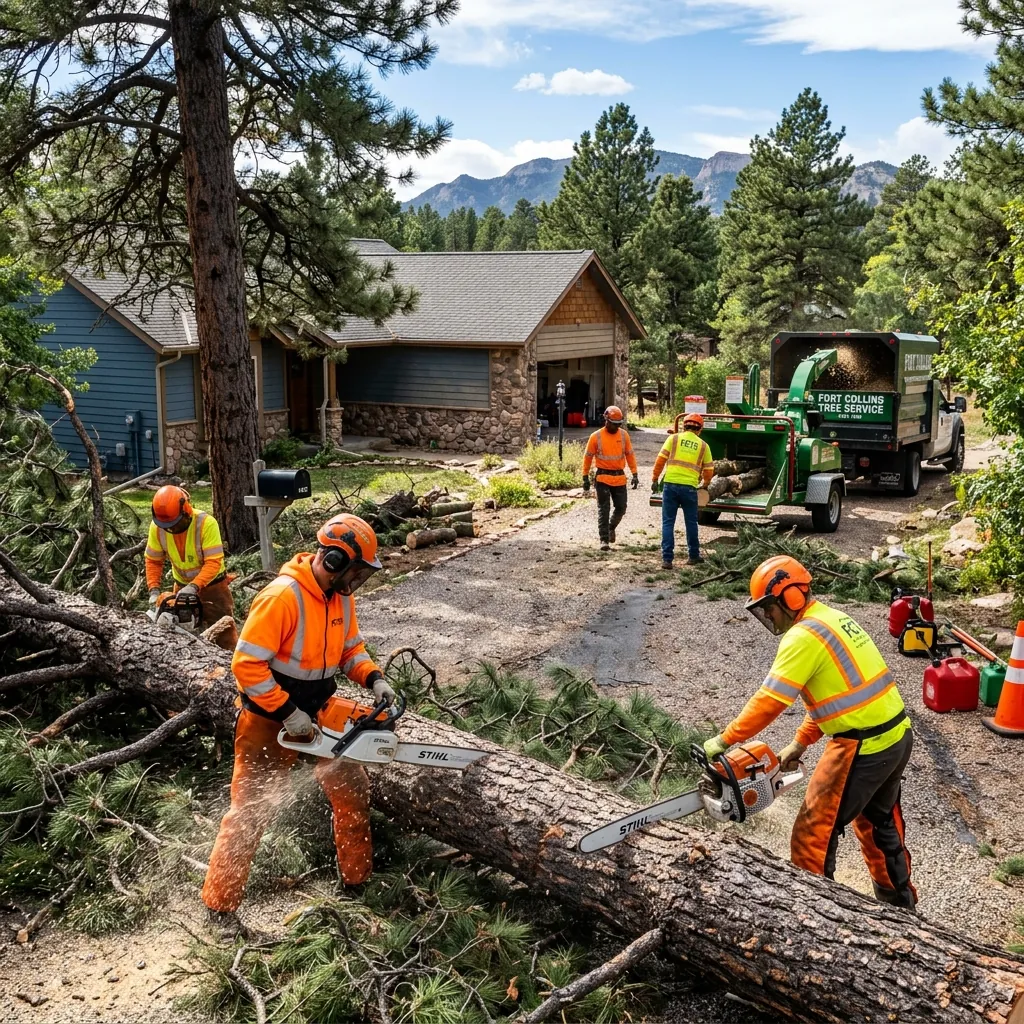
Storm Recovery
24/7 emergency dispatch for fallen branch extraction, tree failure chipping, and immediate hazard clearing after wind or snow storms.
View DetailsTree Trimming FAQs
Find answers to common questions about tree trimming cycles, crew safety, and pricing in Colorado:
For most deciduous yard trees (like maple, ash, or oak), professional pruning every 3 to 5 years is ideal to maintain shape, raise the canopy, and clear deadwood. Faster-growing species or younger structural trees benefit from structural trims every 2 years to direct branch habits.
Topping, the severe cutting back of major limbs to stubs, is highly damaging. It triggers a shock response in the tree, causing it to rapidly grow weak "sucker" shoots that split off easily in wind. It also exposes large cuts to decay and wood rot. We follow proper natural drop-crotch pruning methods instead.
Yes. Our crew is trained in utility line clearance operations. For main power grid lines, the municipal utility company (like Fort Collins Utilities or Xcel Energy) handles clearance, but we regularly prune branches growing around residential service drop lines running directly to your house.