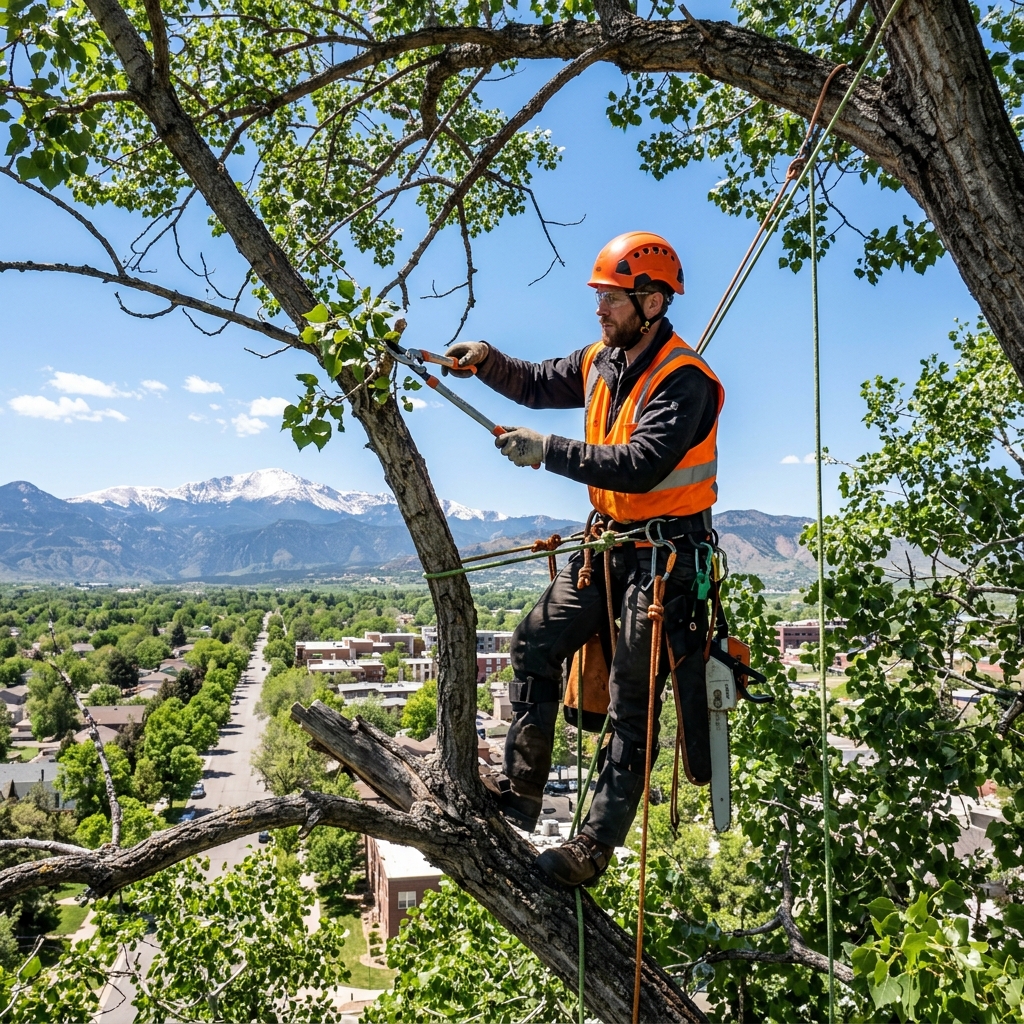
Protecting Your Canopy from Heavy Colorado Snows
Winter in Northern Colorado and Southeast Wyoming is notoriously tough on mature trees. Between early heavy snowstorms and high winds blasting off the Front Range, pines, spruce, cottonwoods, and maples face severe structural stresses. Proper winter preparation, started in mid-to-late autumn, is essential to minimize storm hazards and protect your property's value.
Mature windbreaks—vital for shielding ranches and estates in Greeley and Cheyenne—require strategic windward trimming to allow high-velocity gusts to pass through safely without snapping the trunks. Without regular maintenance, high-density windbreak rows can act as solid sails, leading to catastrophic root failure or mid-trunk splintering during severe storms.
Key Steps to Winterize Your Property's Trees
1. Structural Deadwooding and Pruning
Pruning deciduous trees in their dormant late autumn or winter phase is highly recommended. It makes structural defects easier to spot, and because the tree is dormant, the risk of disease spread is minimal. Dead, diseased, or codominant stems should be cleanly removed. Trimming back heavy, overhanging limbs that extend over rooftops or service lines should be prioritized to mitigate catastrophic failures under heavy ice or snow loads.
2. Mulch Application for Root Insulation
Colorado soils dry out quickly in the cold, windy months. Apply a 3- to 4-inch layer of organic wood mulch around the critical root zone of young or sensitive trees. Make sure to keep the mulch a few inches away from the trunk itself (avoiding "mulch volcanoes") to prevent rot and bark decay. Mulch locks in soil moisture and insulates tender root systems from rapid temperature swings.
3. Protective Wraps for Young and Thin-Barked Trees
Young maples, ashes, honey locusts, and linden trees are susceptible to sunscald. This damage occurs when warm winter sunlight heats the bark during the day, followed by a rapid temperature drop after sunset, freezing active cells and splitting the bark. Wrapping trunks with light-colored commercial tree wrap from the base up to the first tier of branches prevents this cracking. Keep the wrap on from late October through mid-April.
4. Supplemental Deep Watering
Before the ground freezes solid in December, provide deep, supplemental watering to evergreens and newly planted trees. Evergreens continue to transpire (lose moisture through needles) during the winter, and dry winter winds can dehydrate them. Water when temperatures are above 40°F and the soil is not snow-covered.
Emergency Winter Dispatch Services
If you experience structural limb failure or branch blockades during a heavy blizzard, avoid attempting self-clearance near utility wires. NoCo Services provides 24/7 priority emergency dispatch crews across Larimer, Weld, and Boulder counties. We deploy crane rigs and specialized rigging to safely extract wind-snapped trunks and heavy branches without causing additional property damage.
Mitigating Sunscald and Frost Cracks on Young Deciduous Trees
Winter in Colorado brings intense sunshine combined with freezing air temperatures. This combination creates a significant hazard known as sunscald, which primarily affects thin-barked young trees such as Maples, Lindens, Honey Locusts, and fruit trees. During warm winter afternoons, the high-angle sun heats up the bark on the southwest side of the trunk, activating cells from dormancy. As soon as the sun dips behind the Rocky Mountains, the temperature drops rapidly below freezing, instantly killing the active cells. This results in vertical, sunken scars and cracked bark that expose the tree's inner wood to wood-boring insects and rot. To prevent sunscald, NoCo Services recommends wrapping young tree trunks with protective, breathable crinkled paper wrap starting at the base and wrapping up to the first tier of branches. This wrap reflects the winter sun and insulates the bark, and should be applied in late October and removed in early April.
Deep-Root Watering and Dormant Pruning Protocols
Colorado's winters are often dry and windy, which dehydrates trees from the roots up. Conifers and evergreen species continue to lose moisture through their needles all winter long. If the soil freezes dry, the roots cannot absorb water, leading to winter desiccation (needle browning and dieback). We recommend deep-root watering once a month during dry spells from November through March, applying water when the temperature is above 40 degrees and the soil is not snow-covered. Pruning during winter dormancy is also highly beneficial. Because the tree is inactive, pruning cuts do not sap nutrients or trigger new growth that would be killed by freezes. Furthermore, the absence of leaves allows our arborists to clearly inspect the tree's skeletal structure, identifying hidden structural cracks, rubbing limbs, and deadwood. Dormant pruning also minimizes the spread of active pathogens like Fire Blight, which are dormant during cold winter months.