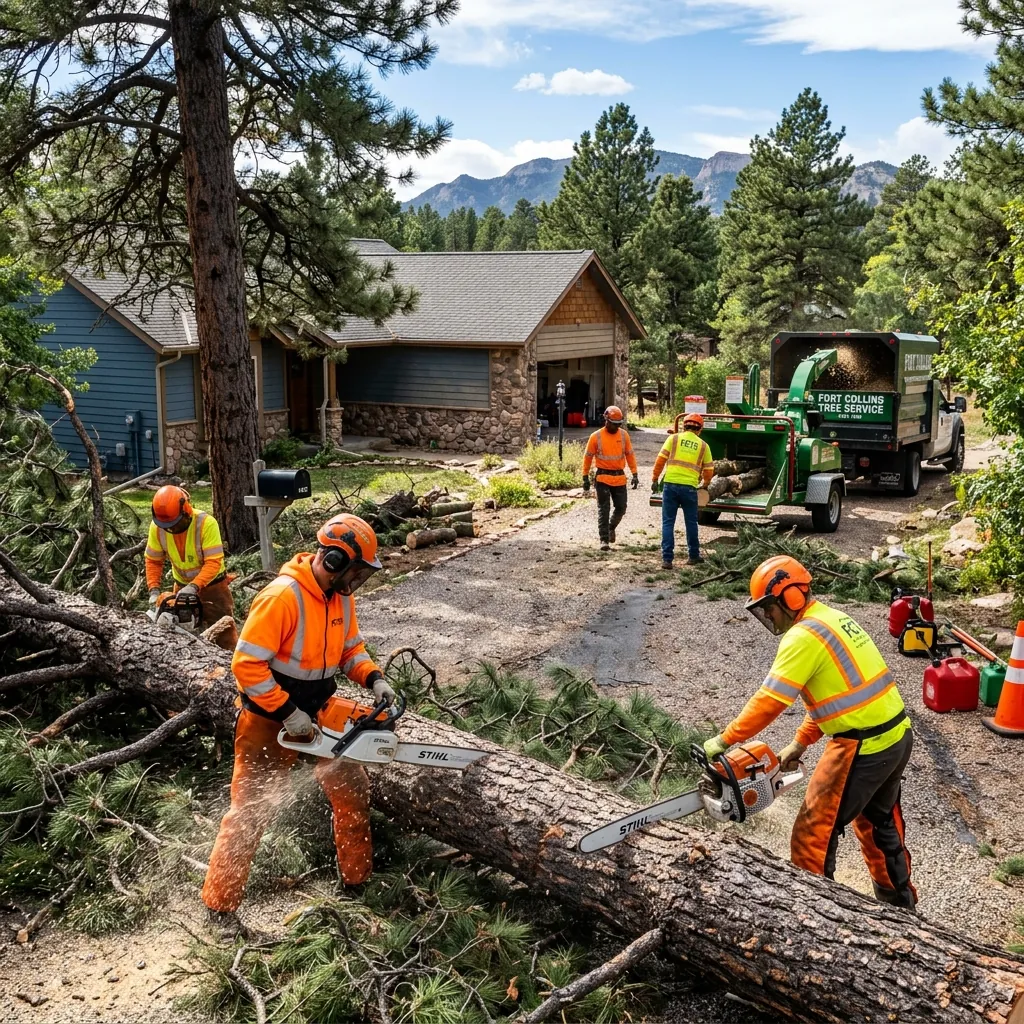
Handling Storm Emergencies Safely on Your Property
Front Range storms are notorious for bringing heavy wet snow, ice loads, and microburst wind gusts that can tear shingles, dent siding, topple fences, and snap heavy tree limbs. When a storm strikes Fort Collins, Loveland, or Cheyenne, the immediate aftermath can be chaotic and dangerous. Knowing how to assess damage safely, document it for insurance, and coordinate emergency repairs is what protects your home and prevents injuries.
NoCo Services provides 24/7 priority emergency storm dispatch crews. We are equipped to tarp roofs, board up openings, and clear hazardous trees and debris under extreme conditions. Our local team works directly with homeowners and insurers to stabilize properties quickly. Learn more about our storm damage cleanup services.
Front Range Weather: Microbursts and Wind Shears
Northern Colorado's proximity to the Rocky Mountains subjects the region to unique wind behaviors. Downslope windstorms, microbursts, and rapid wind shears can accelerate air currents from 0 to over 80 MPH in seconds. Unlike slow-moving eastern weather patterns, these sudden gusts exert extreme, asymmetrical leverage forces on tree canopies, snapping trunks that survived decades of straight-line winds. Understanding this local weather pattern is a big part of keeping a property storm-ready.
Identifying Hidden Weaknesses Before the Storm
Most tree failures during storms are the result of pre-existing structural issues. A trained crew inspects trees for weaknesses like codominant stems, girdling roots, and bark inclusions. Codominant trunks grow closely together, creating bark inclusions (trapped bark where the wood cannot fuse). Under high winds, the two halves act as levers, pushing apart until the trunk splits. Regular canopy thinning reduces wind resistance and prevents failures.
How to Verify Contractor Insurance and Credentials
After a destructive storm, out-of-state "storm-chasers" flood local neighborhoods offering tree removal services. These operations are often unlicensed, carry no worker's compensation insurance, and lack safety training. If an accident occurs on your roof, the homeowner can be held liable. Always ask for proof of local liability coverage, verify licensing, and check references before hiring any emergency crew. Ensure the contractor carries both General Liability (covering property damage) and Worker's Compensation (covering crew injuries) to shield yourself from legal liability.
Immediate Safety Hazards to Inspect After a Storm
1. Overhead Hanging Branches (Hangers)
Broken limbs that are caught high in the tree canopy are known as "hangers." These limbs are unstable and can fall at any time, especially during subsequent gusts. Do not walk or park vehicles under damaged canopies until hangers have been safely removed by a professional climber or bucket truck crew.
2. Uprooted Root Plates and Soil Heave
High winds can push mature trees past their structural tipping point, lifting the root plate and causing the surrounding soil to heave. If you notice cracked soil or exposed roots, the tree's anchorage is compromised and it is at high risk of falling. Stay clear of the tree's fall path and call for a hazard inspection immediately.
3. Split Trunks and Codominant Failures
Vertical cracks or splits in main trunks indicate severe structural failure. Trees with codominant stems (double trunks) are highly susceptible to splitting down the middle under heavy snow loads. If you notice active splitting, the tree must be stabilized or removed immediately to prevent property damage. We offer rapid-response emergency tree mitigation to secure structural hazards.
4. Proximity to Downed Power Lines
Never approach or touch a tree that has fallen onto or is in contact with utility lines. Even if the power appears to be out, the line can become re-energized at any time. Stay at least 35 feet away and report the issue to your local utility provider (such as Xcel Energy or Platte River Power Authority) immediately. Once the line is cleared, we deploy specialized rigging to remove the remaining debris.
Documenting Storm Damage for Insurance Claims
Homeowner insurance policies typically cover damage to your home, garage, and fences, along with the cost of removing trees that have fallen onto a covered structure. To ensure a smooth claims process:
- Prioritize Safety: Do not enter hazardous zones or climb roofs to take pictures.
- Take Detailed Photos: Photograph all of the damage from multiple angles, including the roof, siding, fences, and any tree that has hit a structure.
- Document the Scope: Capture the damage to roofing, siding, and structural framing, along with the size of any fallen limbs and the spread of debris.
- Request a Professional Log: Our team provides detailed, written assessments and estimates to submit directly to your insurance adjuster.
Professional Tree Extraction and Structural Protection
Removing a heavy tree that has fallen onto a house requires surgical precision. Simply cutting the trunk can cause the tree to shift, leading to secondary structural damage or collapsing roofs. Our crews use crane setups and bucket trucks to lift the tree vertically off the structure, piece by piece, minimizing further home damage. We also coordinate with local utility dispatches if tree removal requires temporary power line drops. For high-risk removals, we utilize trained riggers. Check out our crane and bucket truck services for tight-space extractions.
Regular upkeep is the best way to limit storm damage. Keeping gutters clear, sealing exterior wood, and trimming deadwood near the house all help a property ride out Front Range blizzards. Contact NoCo Services today for a free assessment of your property.