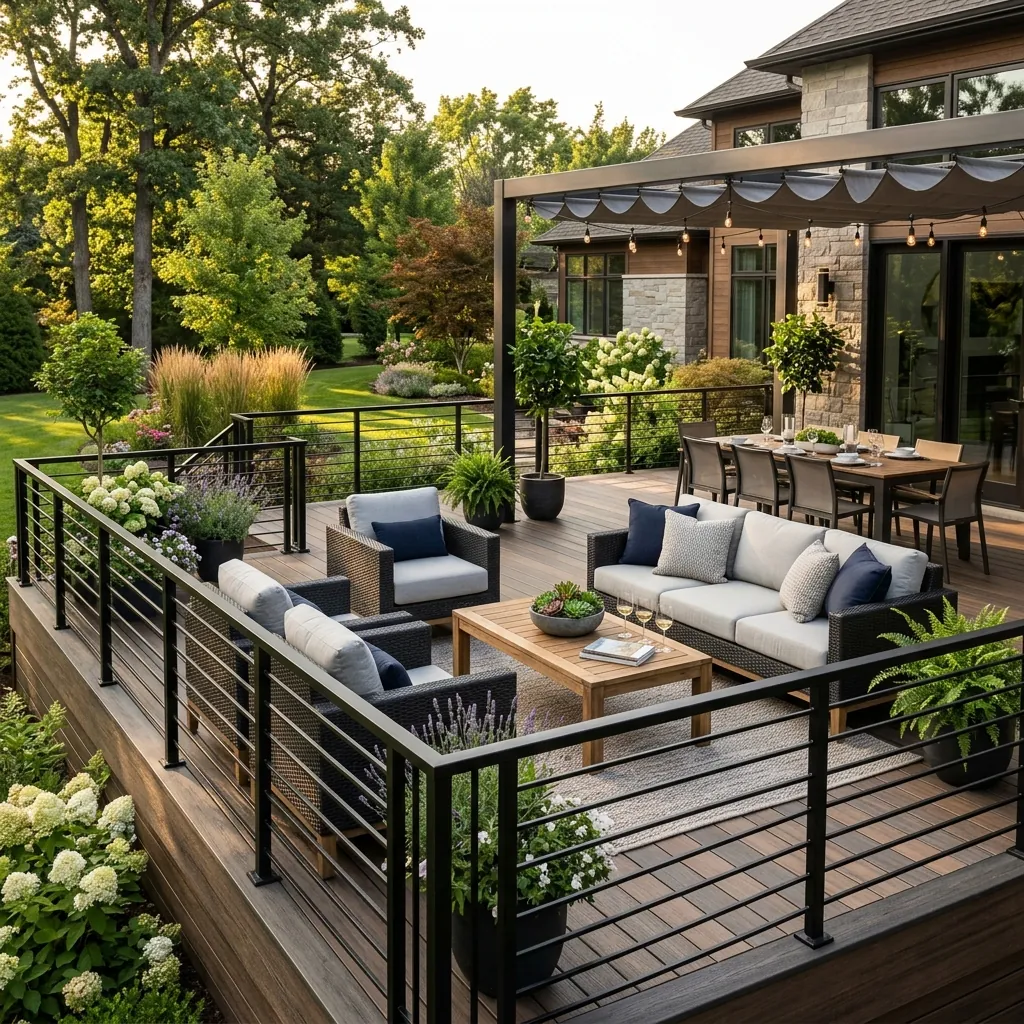
What the Colorado Climate Does to a Deck
A deck on the Front Range takes more abuse than most people expect. High-altitude sun fades and dries out board finishes faster than at lower elevations, and the daily freeze-thaw swing works moisture into the wood until it cups, cracks, or splinters. The material you choose decides how much time and money you will spend keeping the deck safe and good-looking over the next twenty years. The three common options are pressure-treated pine, cedar, and composite, and each fits a different budget and maintenance appetite. We build all three on our deck and railing projects.
Pressure-Treated Wood
Pressure-treated pine is the most affordable framing and decking material, which is why it sits under most decks in the region. It resists rot and insects thanks to the chemical treatment, and it takes stain well. The trade-off is upkeep. Treated lumber needs a full year to dry out before its first seal, then a fresh coat of stain or sealer every two to three years to hold off the sun and moisture. Skip that upkeep and the boards will check and warp. For a homeowner who enjoys a weekend project and wants the lowest upfront cost, treated wood earns its place.
Cedar
Cedar is the mid-range choice, prized for its warm color and the fact that it naturally resists rot and insects without chemical treatment. It runs cooler underfoot than composite in direct sun, and it mills into clean, splinter-free boards. Cedar still needs sealing every couple of years to keep its color, since left alone it weathers to a silver-gray. For homeowners who want real wood with a premium look and can commit to periodic sealing, cedar strikes a comfortable balance between cost and beauty.
Composite and PVC
Composite boards are made from wood fibers and recycled plastic, and PVC boards are all plastic. Both cost the most up front, often two to three times the price of treated wood, and both nearly erase the maintenance. There is no staining or sealing, just an occasional wash. Modern composite resists fading far better than early versions did, and it will not splinter, which matters for bare feet and kids. The two things to watch in Colorado are heat, since dark composite gets hot in full afternoon sun, and quality, since cheaper lines fade unevenly. Over a twenty-year span the higher upfront price often evens out once you count the stain, sealer, and weekends you never spent maintaining it.
Matching the Material to Your Plans
The right pick depends on budget, how long you plan to stay, and how you feel about upkeep.
- Lowest upfront cost and you enjoy sealing it yourself: pressure-treated wood
- Real wood look with moderate upkeep: cedar
- Lowest long-term maintenance and longest lifespan: composite or PVC
Framing matters as much as the surface. We build every deck on a treated, properly flashed frame with footings dug below our frost line, so the structure lasts regardless of which decking you choose. Contact NoCo Services for a design consultation and a written quote that lays out the cost difference between materials for your specific layout.