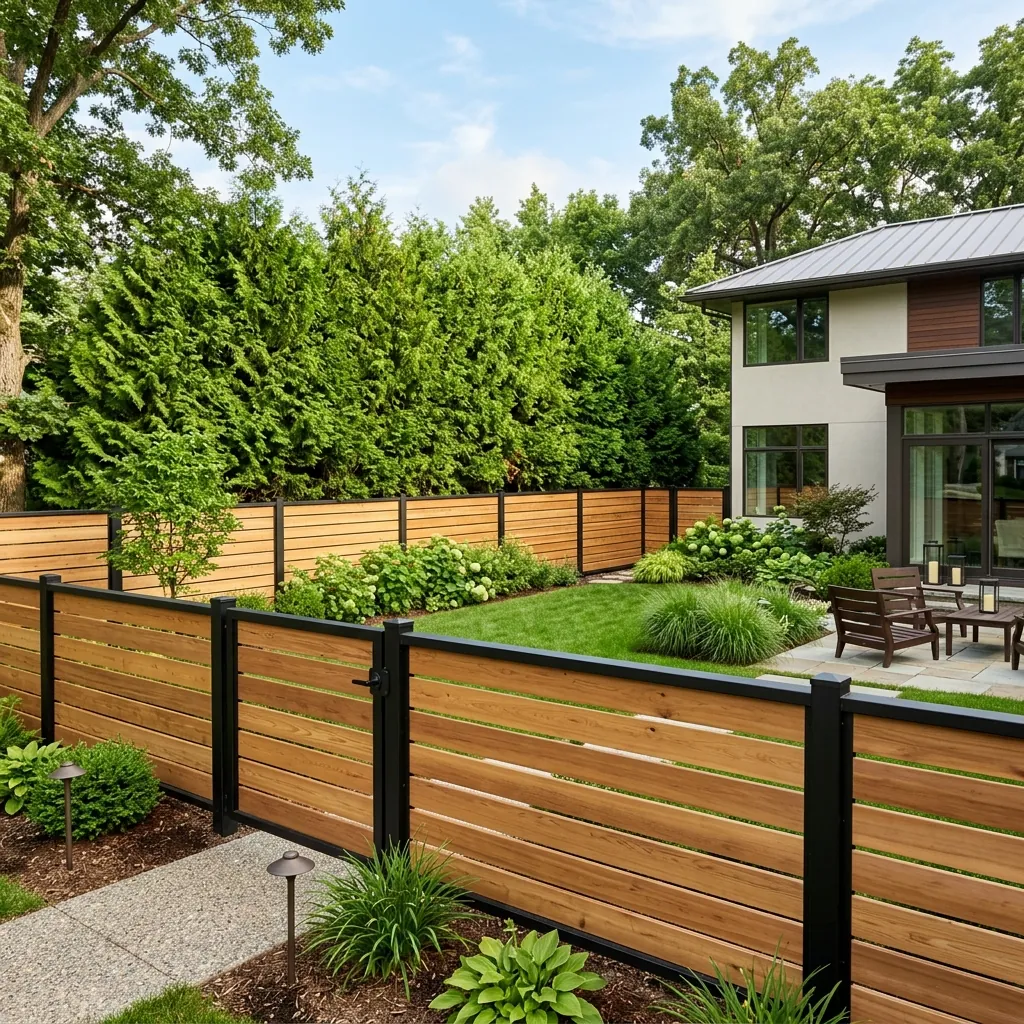
Wind Is the First Thing to Plan For
Front Range wind gusts routinely top sixty miles per hour, and a fence is basically a sail. The wrong design catches that wind and racks, leans, or loses panels in the first big storm. Good wind performance starts underground, with posts set deeper than usual, often three feet or more, in concrete footings sized for our frost line. Above ground, a little airflow helps. A privacy fence with a small gap between pickets, or a shadowbox pattern with boards alternating on each side of the rail, lets wind pass through instead of pushing the whole run over. We build every fence with wind in mind on our fencing projects.
Comparing the Common Materials
Wood
Cedar and treated pine are the regional favorites for privacy and classic looks. Wood is affordable up front and easy to repair one board at a time, though it needs sealing every few years to fight the high-altitude sun. A well-built cedar fence lasts fifteen to twenty years with basic care.
Vinyl
Vinyl costs more at installation but never needs paint or sealer, and a quick wash keeps it looking new. Choose a heavier grade here, since thin panels can get brittle and crack in deep cold. On a proper post setup, vinyl handles wind well and lasts for decades.
Metal
Steel and aluminum ornamental fencing suits front yards and anywhere you want a boundary without blocking the view. The open pickets shrug off wind, and the finish needs almost no upkeep. It offers security and looks rather than full privacy.
Check Your HOA and City Rules First
Many Northern Colorado neighborhoods run under an HOA, and the covenants often dictate the height, style, material, and even the color of a fence. Some require that the finished side face your neighbors, and corner lots frequently carry sight-line rules near the street. Beyond the HOA, cities like Fort Collins cap fence height, commonly around six feet in back yards and lower in front, and may require a permit. Sorting this out before you buy materials saves you from tearing out a fence that breaks a rule. We check local codes and HOA requirements as part of planning every job.
Know Where Your Property Line Actually Is
Building on the wrong side of a boundary is one of the most expensive fence mistakes, and it is entirely avoidable. If your plat or survey is not clear, a survey pins the corners so the fence sits on your land. It is also worth talking with the neighbor early, since many fence lines end up shared and split. Before anyone digs, call 811 for free utility locates so the post holes miss the gas, water, and electric lines running through the yard.
Planning Your Fence Project
A fence that lasts comes down to a few decisions made in the right order.
- Match the material to your goal: privacy, security, or looks
- Design for wind with deep footings and some airflow
- Confirm HOA rules, city height limits, and permits
- Verify the property line and call 811 before digging
Handle those and the installation itself is the easy part. Contact NoCo Services for a walkthrough of your yard and a written quote that covers materials, layout, and the wind-rated post setup your property needs.